
History of Hooked Rugs in Nova Scotia
2025 gifted us with a cold winter. With our heat pums, airtight fireplaces, furnaces, we count our blessings that we have not just a house, but a warm home to shield us from this cold. But imagine it is, say, 1840 in Paradise, Bridgetown, Lawrencetown, or any other east coast community in Atlantic Canada.
You are proud of your home; it is much better than the first rough shelters your parents or grandparents constructed to get through their first winters here. In your new home you vowed never to be so cold again! You stuffed yoru walls with seaweed, horsehair, wool, straw – anything to cut out the bitter northwest winds. But the floors were the worst. Unless you sat with your feet up by the huge fireplace or one of those newer stoves, those feed of yours were never warm.
Enter homemade rugs – homespum, braided, but in 1840 or so and beyond, hooked.

Pastoral Scene made by Linda Hankinson
Hooked rugs are made by pulling loops of yarn or rag strips up through a loosely woven foundation cloth, usually burlap, using a tool like a crochet hook. The rag strips came from cloth too precious to waste, recycled clothes no longer worn. The foundation cloth came from burlap bags split open. The hooks were made by wood carved into handles and nails hammered into the wood and filed at the tip to make a hook.
And then came the beauty. That came from the minds and hearts and spirits of the women who hooked the rugs. They would sketch designs on the burlap using charcoal from the fireplace. Their designs, often called “primitive” were naturally inspired by their surroundings-animals, birds, and flowers from the farm, and creatively executed. From their minds and hearts and spirits the utilitarian was transformed into the crafted, and into art. Instead of just the rags available, white wool could by dyed using local plants- yellows from goldenrod, marsh marigold, sumac, oak, and sunflower, greens from mint or ash, reds from high bush cranberry, sumac, bloodroot, blues from grape, sycamore, larkspur, browns from nuts and trees.
The designs could be floral, scrolled, ornate, or pictorial (you could hook a picture of your own home or property). They could be geometric, fanciful, magical. There was and is no limit to the art and skill of the rug hooker.

Ida Harris hooked this tapestry of her home in the 1930s. The car belong to Graham Paige. Photo Credit: Deborah White from the Harris family.
And the rugs were not limited to floors after all. They topped bedclothing to keep sleepers warm at night, or hung on walls, framed as art. They decorated pillows, covered stools, softened wooden chair seats.

This shows the burlap backing and finishing, frayed from years of sliding on wooden chairs. Unknown maker and date, but it is at least 50 years old.
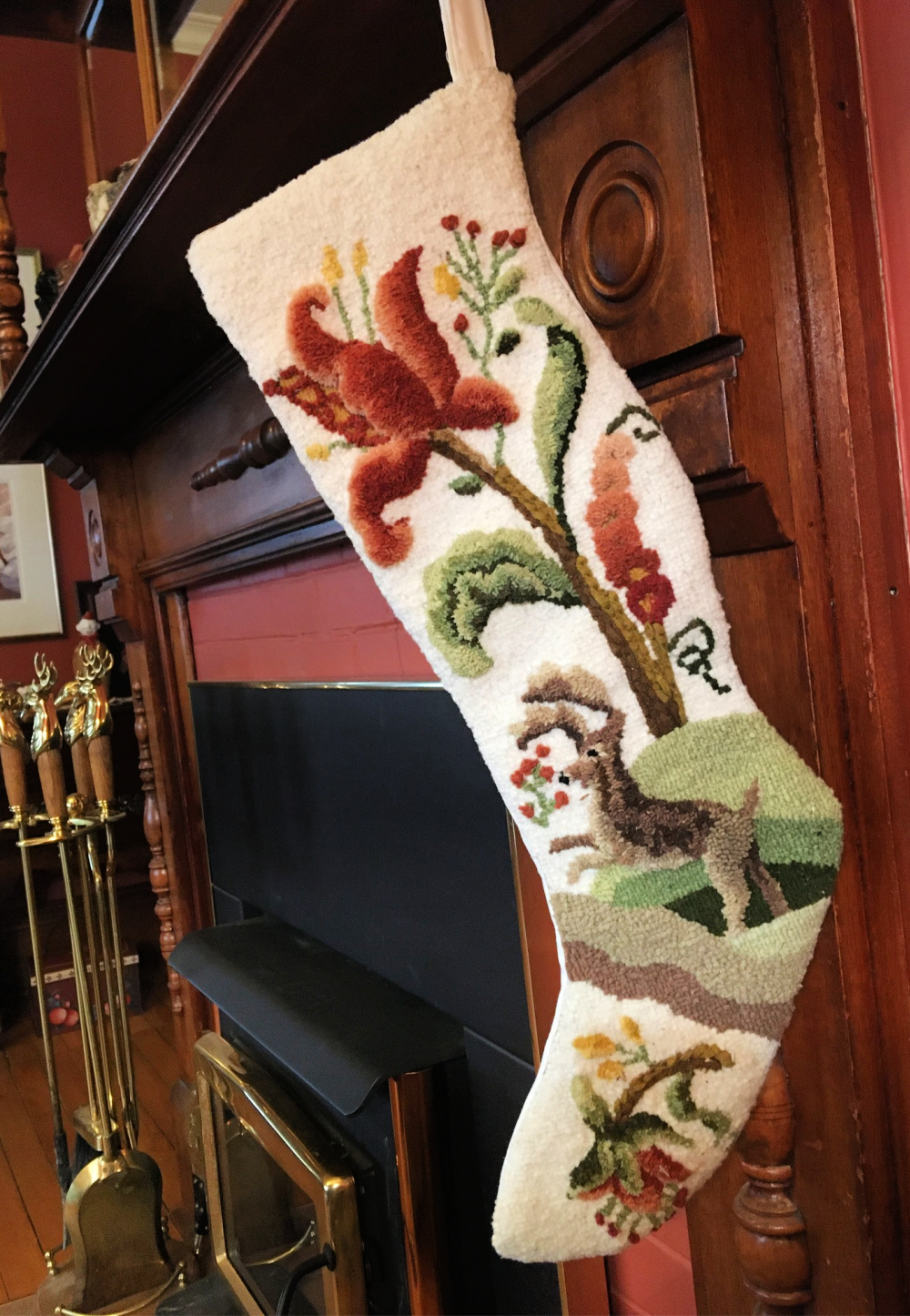
Christmas stocking made by Linda Hankinson
For over a century interest in rug hooking grew in Nova Scotia. Stenciled patterns became available and were popular, but so too were the groups of women encouraging one another and returning to the idea of recovering the craft and creating original designs.
From the website of The Rug Hooking Guild of Nova Scotia:
“According to our archives, Edna Withrow, from Ottawa, influenced rug hooking in Nova Scotia throughout the 50s, 60s and 70s. Through the Nova Scotia Department of Handcrafts, Mrs. Withrow taught classes in several areas: Cape Breton, Halifax, the South Shore and the Annapolis Valley.
In October 1977, Joan Moshimer conducted a one day workshop entitled ‘Hooking and Shading Featuring Birds’ in New Ross. One hundred and twenty craftspeople attended this workshop. Eager for more knowledge, craftspeople from the Valley and South Shore area attended a rug school in Windham, Maine in 1977 and 1978.
It was at this time that Phyllis Best, Helen Giles and Lorraine Rand met with Doris Eaton and Nancy Wolff and decided that it was time to form a Guild in Nova Scotia. At a meeting in the Forties on April 2, 1979 the motion to form the Rug Hooking Guild of Nova Scotia was passed unanimously. The initial aims and purposes of the guild were ‘to hold rug camps and workshops and get information, requirements and qualifications regarding exhibitions, shows etc. Also to help groups get information regarding teachers for specific topics’”.

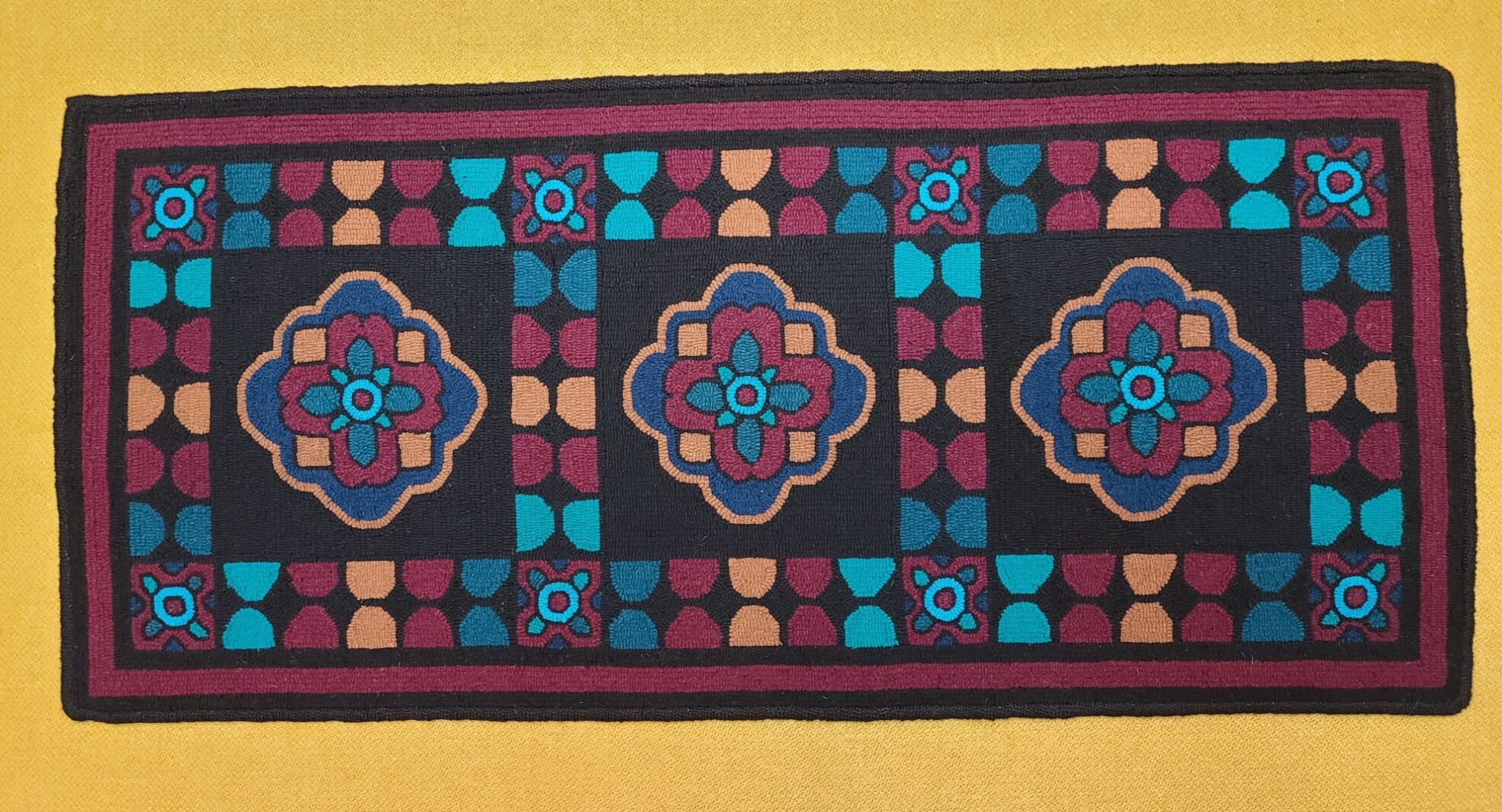

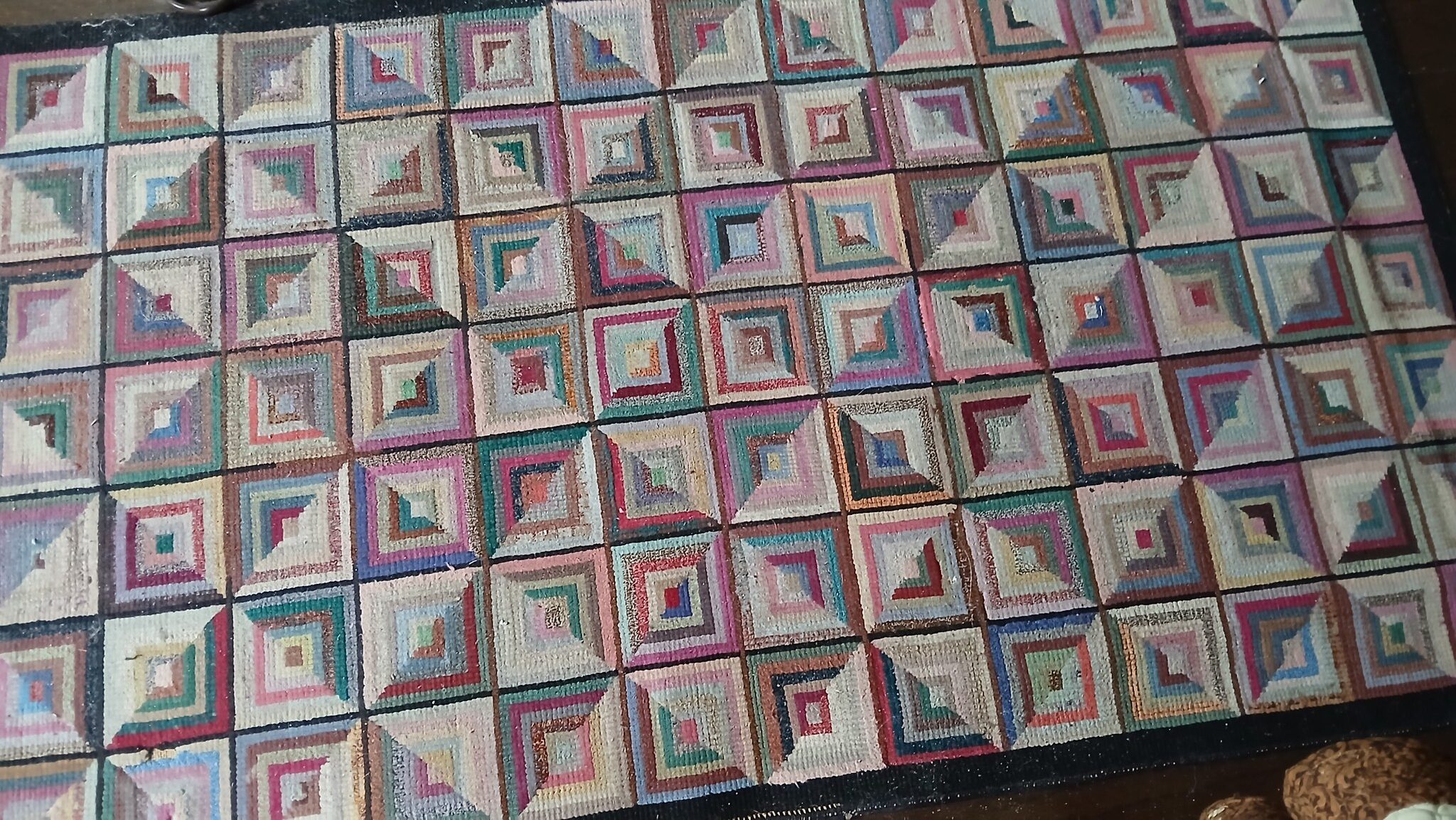
Click on the image to enlarge and view a slideshow with more beautiful hooked rugs.
It has been the honour of the Paradise Heritage Centre to host workshops for rug hooking beginners and to learn more about it ourselves. Many thanks to Monica Bailey, Linda Hankinson, and Stephanie Duggan Haggan for all the time, energy, and material they donate, and to those eager learners who show up. They are all amazing artists and Linda is also a board member of the Paradise Historical Society. The workshops not only enhance the local rug hooking community, they raise funds for our Heritage Centre. It’s a gift all around.
What memories do you have of parents or grandparents working on their hooked creations? Or if you have any pictures of surviving family pieces from the last century, we would love to see them. Please visit us on Facebook to share your stories with us.
Written by Barbara Bishop (with help from Monica Bailey)